
By CrossBorder IP · Published May 12, 2026
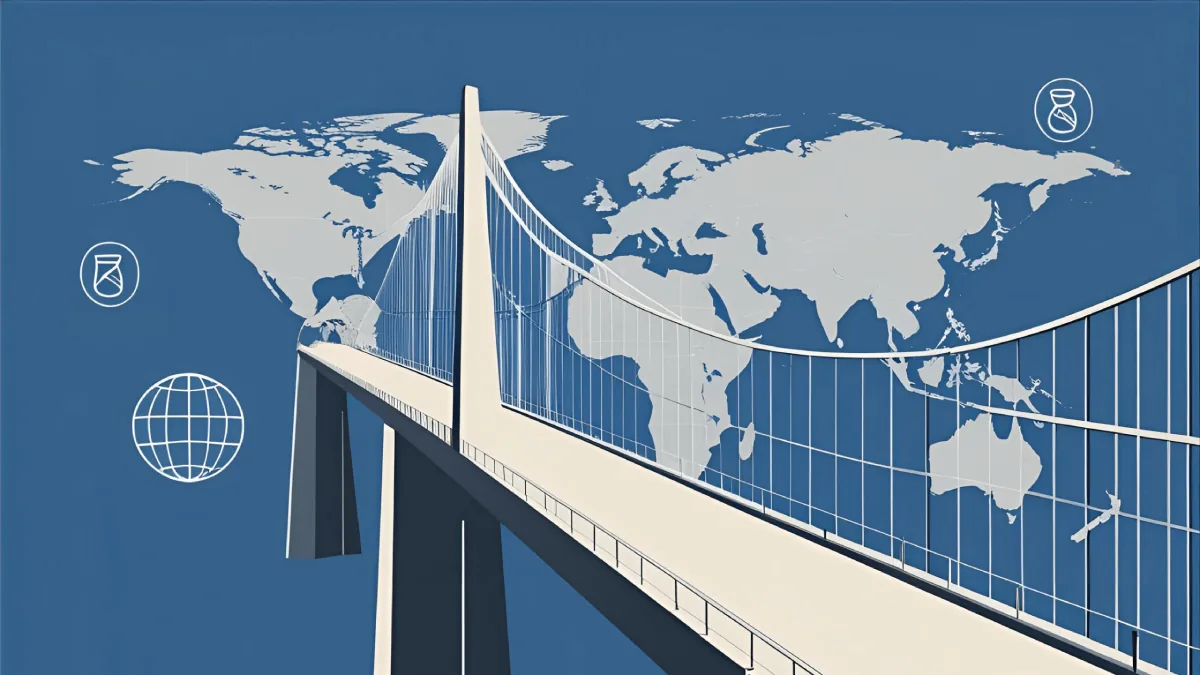
If your business makes, sources, or sells physical products, tariffs are no longer just a finance problem or a logistics problem. In 2026, they are an intellectual property problem — and most companies have not connected those dots yet.
The rapid succession of US tariff actions, reciprocal tariff measures, and ongoing Section 301 investigations tied to technology transfer have forced thousands of companies to rethink their supply chains. Products are being moved from China to Vietnam, Mexico, India, and beyond. New contract manufacturers are being brought on quickly. Sourcing decisions that used to take months are now being made in weeks.
Every one of those decisions creates new IP exposure. And most businesses are managing the tariff problem without managing the IP risk that comes with it.
This guide explains exactly how tariff-driven supply chain changes threaten your intellectual property — and what to do about it before your competitive advantage walks out the door.
Why Tariffs and IP Strategy Are Inseparable in 2026
Here is the core problem: your IP lives wherever your supply chain goes.
When you were manufacturing in a single factory with a long-term partner, your IP exposure was relatively contained. That factory knew your product specs, your materials, your processes, and your packaging — but you had an established relationship, existing contracts, and years of working history.
Now imagine you shift production to a new factory in Vietnam because Chinese tariffs made your margins untenable. That factory’s team now sees your:
- Product designs, CAD files, and technical specifications
- Manufacturing processes and quality control procedures
- Proprietary formulations, materials, or component configurations
- Packaging designs, trade dress, and brand assets
- Pricing structures and cost-of-goods data
All of that information — which is your competitive advantage — is now in the hands of a new manufacturer in a new country, under whatever contract you signed in a hurry to meet a production deadline.
Supply chain changes are the single largest source of preventable IP loss for physical product companies. Tariff-driven relocations are happening faster than IP protections are being put in place.
The Four IP Risks Created by Supply Chain Relocation
Risk 1: Trade Secret Exposure to New Manufacturers
When you bring on a new contract manufacturer, you are sharing your trade secrets with them. Your product formula, your process know-how, your tooling specifications — all of it becomes visible to a factory you have no prior relationship with and no established trust in.
The risk is compounded when the move is rushed. Proper IP protections require:
- A Manufacturing Agreement with explicit confidentiality obligations and IP ownership clauses
- Non-disclosure agreements signed before any technical information is shared
- Clear definitions of what information is confidential and how it must be handled
- Restrictions on the manufacturer sharing your information with sub-contractors
- Return or destruction of confidential information if the relationship ends
PRO TIP: Before sharing any technical files with a new manufacturer, have a signed NDA and Manufacturing Agreement in place. This is non-negotiable regardless of the timeline pressure you are under.
Risk 2: Design Patent and Trade Dress Gaps in New Markets
If you move manufacturing to Vietnam and start selling into Southeast Asian markets, your US design patent does not protect you there. Your EU trademark does not protect you in Vietnam. IP protection is territorial — you only have rights where you have registered them.
The markets you now need to prioritise for protection:
- Vietnam — increasingly the destination for manufacturing relocation; IP enforcement improving but still challenging
- India — a fast-growing manufacturing hub; trademark and design registration now more important than ever
- Mexico — USMCA provides some framework but manufacturer IP exposure remains high
- Indonesia and Thailand — major beneficiaries of supply chain diversification; relatively weak IP enforcement environments
If you are manufacturing in a country, register your trademarks and designs there. The cost of registration is a fraction of the cost of enforcement after a violation occurs.
Risk 3: Ownership Ambiguity in New Manufacturing Contracts
One of the most dangerous IP landmines in manufacturing contracts is the question of who owns improvements, modifications, and tooling. If your Vietnamese manufacturer’s engineers suggest design modifications and you approve them — without a contract clause assigning those modifications to you — the manufacturer may own them.
Your manufacturing agreement must address:
- All improvements, modifications, and derivative works belong to you, the brand owner
- Tooling and molds paid for by you remain your property even if physically located at the factory
- The manufacturer assigns any IP created in connection with your product to you
- The manufacturer cannot use your tooling or designs for other customers
Risk 4: Parallel Imports and Gray Market Products
When you shift manufacturing across borders, you create new opportunities for gray market activity — legitimate products manufactured under your licence that are sold into markets at prices that undercut your authorised distribution channels. Gray market products are not counterfeits, but they are harder to stop and require careful contract drafting and distribution agreement structuring to manage effectively.
How to Protect Your IP When Relocating Your Supply Chain
Step 1: Conduct an IP Audit Before You Move
Before signing contracts with a new manufacturer, audit what IP you actually have and where it is protected:
- List every country where you currently manufacture or plan to manufacture
- Check your trademark registrations — are they covering those countries?
- Check your design patent and patent filings — same question
- Identify trade secrets that will be shared with the new manufacturer
- Review existing manufacturing contracts for IP provisions — what gaps exist?
Step 2: File Trademark and Design Registrations in Manufacturing Countries
If you are manufacturing in Vietnam, India, or Mexico without trademark and design registrations, file them immediately. Priority filings for supply-chain-relocated brands:
- Vietnam: Trademark and industrial design registration through the National Office of Intellectual Property (NOIP)
- India: Trademark registration with the Indian Trade Marks Registry; Design registration with the Indian Patent Office
- Mexico: Trademark registration with the Mexican Institute of Industrial Property (IMPI)
- Indonesia: Registration through the Directorate General of Intellectual Property
PRO TIP: Register in manufacturing countries even if you are not selling there. The goal is to prevent your manufacturer or their sub-contractors from registering your brand or designs in their home market.
Step 3: Upgrade Your Manufacturing Agreements
Standard manufacturing agreements are not designed for the IP risks of cross-border production. You need custom provisions covering: broad confidentiality obligations, IP ownership clauses assigning all improvements to your company, tooling and mold ownership provisions, sub-contractor restrictions requiring written approval, audit rights, and return or destruction of confidential materials on termination.
Step 4: Register with Customs in Key Countries
Customs recordation allows border officials to seize counterfeit or infringing goods at the point of import or export. Key programmes:
- US CBP — record your trademark and copyright at e-recordation.cbp.dhs.gov
- EU Customs — file an Application for Action (AFA) through EUIPO
- China Customs — record with the General Administration of Customs (GACC)
- Hong Kong Customs — strategic transit point for Asia-Pacific goods
Step 5: Implement a Trade Secret Protection Programme
Courts consistently require evidence of reasonable measures to protect secrecy. Reasonable measures that courts look for include: clear marking of confidential documents, access controls, regular employee and contractor training, secure file transfer protocols, and exit procedures with signed reminders of continuing obligations.
A Practical Example
A US home goods brand shifts 60% of production to Vietnam to avoid tariffs. In the rush, they share all CAD files via email with no NDA, use a standard template with no IP provisions, and file nothing in Vietnam. Eighteen months later, a near-identical product appears on Southeast Asian e-commerce platforms. The cost of the IP audit, trademark filings, and proper agreements they skipped: approximately $12,000. The cost of the enforcement problem they now face: conservatively $80,000 and growing.
The question is not whether to invest in IP protection during a supply chain transition. It is whether you pay for prevention or pay for enforcement after the damage is done.
Your Tariff-Driven IP Protection Checklist
- ✓IP audit completed — trademark and design registrations mapped against all manufacturing and sales countries
- ✓New manufacturer NDA signed before any technical information shared
- ✓Manufacturing agreement reviewed and upgraded with comprehensive IP provisions
- ✓Trademark applications filed in new manufacturing countries
- ✓Design patent / industrial design applications filed in manufacturing and key sales markets
- ✓Customs recordation filed in US, EU, and key transit countries
- ✓Trade secret protection programme documented with access controls and marking protocols
- ✓Sub-contractor restrictions included in all manufacturing agreements
Ready to protect your IP?
Book a free 15-minute strategy call with Cameron Reid.
Book a Free Strategy CallAbout the Author
Cameron Reid is the cofounder of CrossBorder IP, where he advises SaaS companies, tech startups, e-commerce brands, and in-house legal teams on international IP strategy. With over 20 years of experience spanning Big Law, in-house counsel roles, and startup advisory, Cameron specialises in helping businesses protect and scale their IP globally — particularly across the US, Europe, and Asia-Pacific markets.
Disclaimer: This article provides general information about international IP strategy and should not be relied upon as legal advice. IP laws vary significantly by jurisdiction and every business situation is unique. For specific guidance on your IP protection needs, please consult with a qualified attorney in your jurisdiction.